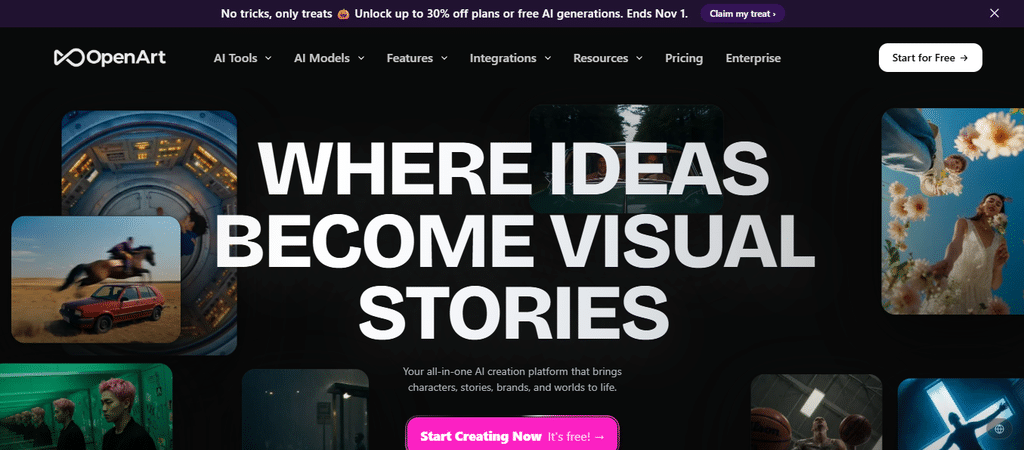
Artificial intelligence has transformed the way people create digital content. From generating realistic images and illustrations to producing cinematic videos, AI-powered creative tools are making professional-looking content more accessible. However, using multiple platforms for different creative tasks can be time-consuming. This is where OpenArt AI aims to make a difference.
OpenArt AI is an AI-powered creative platform that brings together image generation, video creation, image editing, character development, audio tools, and other creative features in one place. It provides access to multiple AI models and tools, allowing users to experiment with different visual styles and produce content without relying entirely on traditional design or video production software.
Whether you are a digital artist, content creator, marketer, business owner, or someone interested in exploring AI-generated media, OpenArt offers a collection of tools worth examining. But does it provide enough value to justify a paid subscription? What features make it different from other AI creativity platforms, and what limitations should you consider before signing up?
In this OpenArt AI review, we will explore its major features, creative capabilities, pricing structure, advantages, disadvantages, and potential use cases to help you decide whether the platform is suitable for your needs.
What Is OpenArt AI?
OpenArt AI is an online artificial intelligence creativity platform designed to help users generate, edit, and transform digital content. Rather than focusing on a single type of AI generation, the platform offers a broader creative environment covering images, videos, audio, and 3D-related experiences.
Users can create visual content from text prompts, upload existing images for editing, generate videos from images or descriptions, and develop recurring characters for different creative projects. The platform also provides access to a wide selection of AI models, giving users flexibility when choosing how to generate their content.
One of OpenArt’s main attractions is its combination of different creative tools. Instead of switching between separate services for image generation, video creation, and visual editing, users can access multiple capabilities through one account.
The platform is particularly relevant for:
- Digital artists looking to experiment with AI-generated artwork.
- Social media creators producing images, videos, and promotional content.
- Marketing professionals creating advertising visuals and product videos.
- Designers exploring new concepts and visual styles.
- Businesses looking for additional ways to produce creative assets.
- Writers and storytellers developing characters and visual narratives.
- Beginners interested in exploring AI-generated images and videos.
Key Features of OpenArt AI
OpenArt offers a wide collection of AI-powered features. Its functionality extends beyond basic text-to-image generation, making it useful for several types of digital content projects.
1. AI Image Generation
Image generation is one of the central capabilities of OpenArt. Users can describe an image through text prompts and use AI models to turn those descriptions into visual content.
The platform supports different creative approaches, including realistic photography, digital illustrations, anime-inspired artwork, conceptual designs, and other visual styles. Users can select available models and experiment with different prompts to achieve their preferred results.
Image generation can be useful for creating social media graphics, blog illustrations, marketing materials, character concepts, wallpapers, and visual references. Instead of starting every project with a blank canvas, users can generate initial concepts and refine them through additional instructions or editing tools.
OpenArt also provides image editing capabilities, allowing users to make changes to existing visuals rather than generating every asset from scratch.
2. AI Video Generation
OpenArt extends its creative capabilities into video production. Its AI video tools allow users to generate videos from text descriptions or existing images, depending on the selected model and workflow.
Users can describe a scene, upload a reference image, and generate moving visuals with different styles, camera movements, and atmospheric effects. The platform also provides access to multiple video-generation models, giving creators different options for their projects.
These capabilities can be useful for:
- Creating short promotional videos.
- Producing social media clips and vertical videos.
- Animating existing photographs and illustrations.
- Developing visual storytelling projects.
- Creating product demonstrations and marketing content.
- Experimenting with cinematic scenes and animation.
Video generation can require more credits than standard image generation, depending on the model, duration, and output settings. Users should therefore consider their expected production volume when choosing a subscription.
3. Consistent Character Generation
Maintaining character consistency is a common challenge when working with AI-generated images and videos. A character may look different across multiple generations, making it difficult to create a connected visual story.
OpenArt addresses this challenge through its consistent character features. Users can create or train characters and reuse them across different images and videos. This can help maintain recognizable facial features and visual identities throughout a creative project.
The feature can be particularly useful for comic creators, digital storytellers, social media personalities, animation projects, and creators developing recurring fictional characters.
It also provides opportunities for building AI-generated influencer concepts and producing multiple pieces of content around a consistent digital persona.
4. AI Image Editing and Enhancement
Generating an image is only one part of the creative process. Sometimes an existing visual needs adjustments, improvements, or additional elements. OpenArt includes several AI-powered editing and enhancement tools to support these tasks.
Depending on the selected tool, users can make changes such as:
- Removing or replacing image backgrounds.
- Adding or removing objects from photographs.
- Expanding images to different aspect ratios.
- Improving image resolution and sharpness.
- Changing visual styles.
- Transforming photographs into illustrations or other artistic formats.
- Extracting individual elements into editable image layers.
These tools can reduce the need for manual editing during everyday creative tasks. They may also help users repurpose existing images for different platforms and formats.
5. Director Mode
Director Mode is designed for users who want more control over AI video creation. Rather than relying exclusively on a single prompt to produce a clip, users can describe scenes, make adjustments through conversational instructions, or begin with available presets.
The feature is intended to support more structured video production, including projects that involve multiple scenes and storytelling elements. OpenArt describes Director Mode as a way to create films of up to five minutes.
This approach may be useful for creators who want to develop more elaborate video concepts instead of generating isolated short clips. However, the final output will still depend on the selected models, prompts, and available generation settings.
6. AI Audio and Voice Tools
OpenArt also includes audio-related creative capabilities. These features allow users to work with voiceovers, text-to-speech generation, and other audio elements within the broader creative platform.
Its text-to-speech functionality allows users to generate voiceovers from written scripts and direct individual lines using additional instructions. The platform also describes voice cloning capabilities, which can be useful for creators looking to develop a more consistent voice for their content.
Audio tools can be helpful when producing narrated videos, social media content, promotional materials, and other multimedia projects. Availability and usage limits may depend on the selected feature and subscription plan.
7. AI Graphic Design Tools
OpenArt includes tools designed to assist with graphic design tasks. Users can generate visual concepts for posters, advertisements, social media graphics, logos, and other marketing materials using text descriptions or reference images.
These features can be particularly useful for small businesses and independent creators who need creative assets but do not always have access to a dedicated design team.
Users can explore different concepts and compare generated variations before refining their preferred design. Nevertheless, AI-generated logos and branded graphics should be reviewed carefully, especially when accuracy, typography, and brand identity are important.
8. Multiple AI Models
Another important aspect of OpenArt is its access to multiple AI models for image, video, and audio generation. The platform’s model directory showcases different options, including models designed for realistic images, visual editing, and video production.
Having several models available gives users the flexibility to experiment with different generation approaches rather than depending on one AI engine for every task.
Different models can produce different results in terms of visual quality, prompt understanding, generation speed, and creative style. This flexibility is valuable for users who regularly work on varied projects.
OpenArt AI Pricing: How Much Does It Cost?
OpenArt offers individual subscription plans as well as options designed for businesses and larger teams. Its individual plans operate on a credit-based system, where monthly credits are used for different generation tasks.
According to the official pricing page, the individual plans include the following options:
| Plan | Monthly Credits | Displayed Monthly Price* |
|---|---|---|
| Starter | 4,000 | $14 |
| Plus | 12,000 | $34 |
| Pro | 24,000 | $56 |
| Wonder | 106,000 | $240 |
*These are the standard monthly prices displayed on the pricing page before applicable annual-billing discounts. Promotional and annual subscription prices may differ. Check the official pricing page for current offers.
Starter Plan
The Starter plan provides 4,000 monthly credits and is designed for users who want to explore the platform without committing to a high-volume subscription. It includes access to Director Mode, OpenArt MCP, multiple premium models, and watermark-free generations.
Plus Plan
The Plus plan offers 12,000 monthly credits and additional generation capacity. It also includes commercial use rights, more consistent characters, and the ability to run more parallel generations. This plan may be suitable for creators who use OpenArt regularly.
Pro Plan
The Pro plan provides 24,000 monthly credits and higher generation limits. It includes commercial use rights, additional character capacity, and support for more simultaneous generations. It may be worth considering for professional creators and users producing content at a higher volume.
Wonder Plan
The Wonder plan is the highest individual subscription option listed on the pricing page. It provides 106,000 monthly credits, higher creative capacity, priority support, and additional benefits for users with demanding production requirements.
OpenArt also offers business subscriptions with shared credits, user roles, administrative controls, and project permissions. Enterprise arrangements are available for organizations requiring customized commercial terms and additional administrative features.
Before subscribing, it is important to remember that the number of images or videos generated from a particular credit balance is only an estimate. Actual usage depends on the selected model and generation settings. Monthly subscription credits also do not automatically roll over to the next billing month, so users should review the platform’s credit policies.
For the latest pricing and plan details, visit OpenArt’s official pricing page.
Pros and Cons of OpenArt AI

Like other AI creativity platforms, OpenArt has several advantages, along with limitations that potential users should consider.
Pros
- Multiple creative tools: OpenArt combines image generation, video creation, editing, audio, and other creative capabilities in one platform.
- Wide model selection: Users can experiment with different AI models depending on their creative requirements.
- Consistent characters: Character generation and reuse features can help maintain visual continuity across projects.
- Video creation capabilities: Text-to-video and image-to-video tools provide additional options for multimedia content production.
- Beginner-friendly workflows: Prompt-based generation makes several creative tasks accessible without advanced design knowledge.
- Editing and enhancement tools: Users can modify and improve existing images instead of relying entirely on new generations.
- Commercial use options: Eligible paid plans include commercial use rights, subject to the platform’s applicable terms.
- Business solutions: Shared credits, team roles, and project permissions support collaborative workflows.
Cons
- Credit consumption: High-resolution images, premium models, and video generations can consume credits quickly.
- Subscription costs: Regular users may need a higher-tier subscription to support demanding creative workloads.
- Learning curve: The large number of tools and models may take time for beginners to understand.
- Variable AI results: Generated content may not always match the user’s original prompt or expectations.
- Model-dependent quality: Output quality, generation speed, and available controls can vary depending on the selected model.
- Limited control compared with traditional editing: AI-generated results may still require manual adjustments in specialized design or video editing software.
Who Should Use OpenArt AI?
OpenArt can serve different types of users depending on their creative requirements.
Content Creators and Social Media Managers
Social media creators can use OpenArt to develop images, short videos, thumbnails, and other visual assets. Its image and video generation features can help produce content for platforms such as Instagram, TikTok, and YouTube.
Digital Artists and Designers
Artists and designers can explore different visual styles, generate creative references, and experiment with AI-assisted editing. Access to multiple models also provides opportunities to compare different artistic approaches.
Marketing Professionals
Marketing teams can use the platform to develop promotional visuals, product-related content, advertisements, and social media creatives. Its graphic design and video-generation features may help accelerate the early stages of creative production.
Small Businesses and Entrepreneurs
Businesses with limited design resources can explore OpenArt for generating marketing materials and other digital assets. However, important brand materials should be reviewed before publication to ensure accuracy, consistency, and originality.
Storytellers and Animation Enthusiasts
Users developing fictional characters, visual stories, and animation concepts may find the consistent character and video-generation features particularly relevant. These tools can help establish recurring characters and experiment with different scenes.
Is OpenArt AI Safe and Suitable for Commercial Use?
OpenArt provides information about account management, privacy, subscriptions, and copyright through its Help Center and official terms. However, users should understand that using an AI platform does not automatically eliminate copyright, intellectual property, or privacy concerns.
The platform provides commercial use rights with eligible subscription plans, but users should review the applicable terms before using generated content in advertising, client projects, or commercial products.
It is also important to avoid uploading images, personal information, or copyrighted material unless you have the necessary rights and understand how the platform handles submitted content.
For businesses, reviewing the platform’s privacy policy, terms of service, and applicable commercial licensing conditions is a sensible step before adopting it for regular production work.
Final Verdict: Is OpenArt AI Worth Trying?

OpenArt AI is a versatile creative platform that brings together several AI-powered content creation tools. Its combination of image generation, video creation, character consistency, image editing, audio features, and access to multiple AI models makes it relevant to a wide range of creative users.
One of its strongest advantages is the ability to explore different creative workflows within a single platform. Users who regularly produce visual content may appreciate having access to image and video generation tools alongside editing and enhancement features.
However, OpenArt is not necessarily the right choice for everyone. Its credit-based pricing structure requires users to monitor their generation usage, and advanced features may require a higher subscription. Additionally, AI-generated results still need human review and refinement, particularly when creating professional marketing assets or branded content.
Overall, OpenArt is worth exploring if you want a centralized platform for experimenting with AI-generated images, videos, and other digital media. Beginners can start by exploring its available trial credits, while regular creators and businesses can compare the paid plans to determine whether the available tools and generation limits justify the subscription cost.
Ultimately, whether OpenArt is worth using depends on your creative goals, expected usage, and willingness to work with AI-assisted production tools.
Frequently Asked Questions (FAQs)
1. What is OpenArt AI used for?
OpenArt AI is used for generating and editing digital content with artificial intelligence. Its tools support image generation, video creation, character development, audio generation, graphic design, and other creative tasks.
2. Is OpenArt AI free to use?
OpenArt offers trial credits to new users, allowing them to explore selected features and AI models. Its broader generation capabilities are available through paid subscription plans. Check the official website for the latest trial conditions and eligibility.
3. Can I generate videos using OpenArt?
Yes. OpenArt includes AI video-generation tools that can create videos from text prompts and reference images. Available features and generation limits depend on the selected model and subscription.
4. Does OpenArt support consistent AI characters?
Yes. OpenArt provides consistent character features that allow users to create and reuse characters across different images and videos. This can be useful for storytelling, animation, and recurring digital personas.
5. Does OpenArt offer commercial use rights?
Commercial use rights are included with eligible paid plans. Users should review the platform’s terms and applicable licensing conditions before using generated content commercially.
6. Who should consider using OpenArt?
OpenArt may be suitable for digital artists, content creators, marketers, designers, small businesses, and anyone interested in generating or editing images and videos using AI.
7. Does OpenArt support multiple AI models?
Yes. OpenArt provides access to multiple image, video, and audio models. Users can explore different options based on their preferred visual styles and generation requirements.
8. Where can I find OpenArt’s latest pricing?
You can find the latest subscription information, available plans, and promotional offers on the official OpenArt pricing page